

Your phone system is how customers, suppliers and staff reach you, so choosing well matters. Most businesses end up weighing two options: SIP trunking and traditional phone lines, also called the PSTN. Each delivers the voice service you rely on, but they work in different ways and bring different strengths. Knowing how they differ helps you land on a setup that fits what you need now and can grow with you later.
SIP Trunking Explained
With SIP (Session Initiation Protocol) trunking, calls travel over an internet connection instead of over physical phone lines. The trunks plug straight into an IP-based PBX (Private Branch Exchange), so you no longer need conventional telephone infrastructure.
The PSTN (Public Switched Telephone Network) needs a dedicated line for every connection. SIP trunking instead relies on Hosted Voice (Voice over Internet Protocol) technology to carry voice, video and other communication data across your internet link. Hosted Voice is a general label for any phone service delivered over the internet, while SIP trunking uses the SIP protocol in particular to set up, manage and end each communication session. In other words, SIP is the framework that makes hosted voice connections possible, keeping call routing efficient and enabling advanced communication features.
How SIP Trunking Developed
As more businesses moved their communications to the cloud, SIP trunking changed a great deal. A short history:
- The 1990s: the first internet-based voice technologies appeared, letting businesses place calls online.
- The early 2000s: the SIP protocol was standardized, turning Hosted Voice into a dependable choice for business calling.
- The 2010s: SIP trunking caught on widely as businesses moved off traditional PSTN lines.
- Today: SIP trunking is the top pick for businesses, offering lower costs, easy scaling and support for unified communications (UC) such as voice, video, SMS and more.
SIP Trunks and Landlines Side by Side
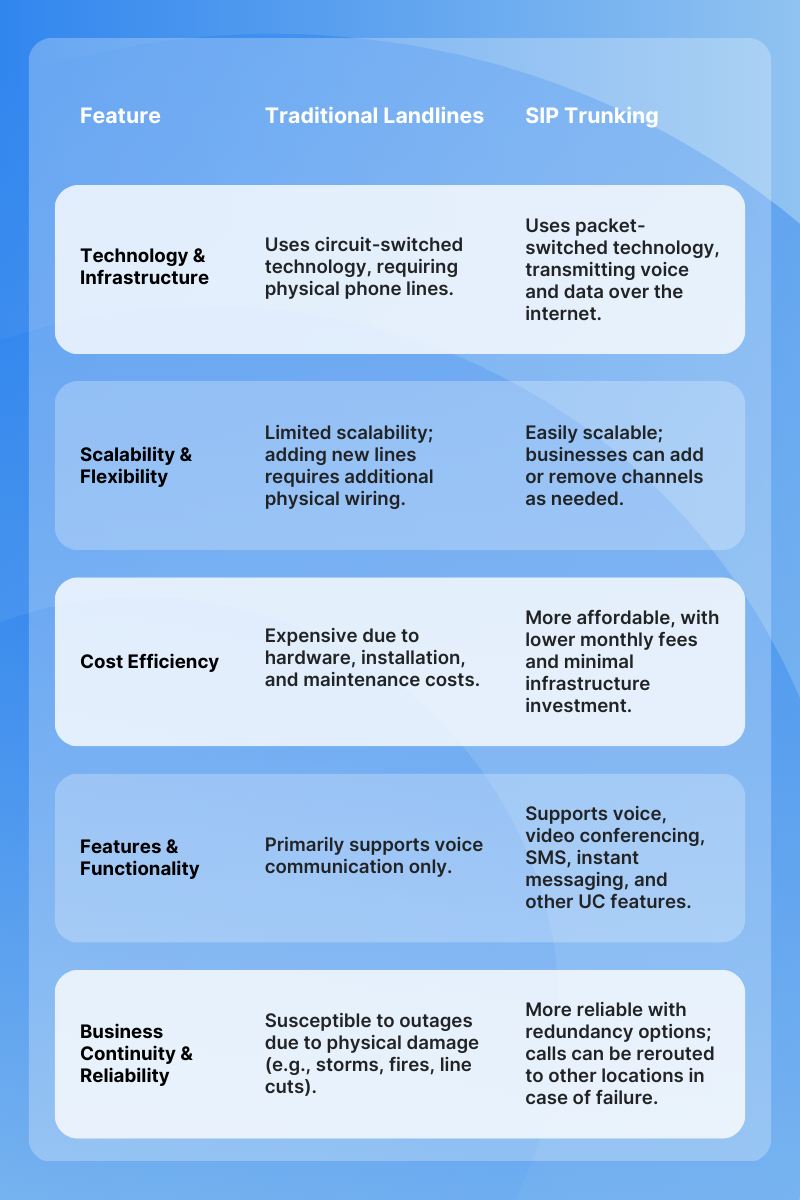
Making the Right Choice for Your Business
The better option for you comes down to your needs, your budget and the infrastructure you already have.
When SIP trunking makes sense
Pick SIP trunking if you want to cut costs and get rid of pricey physical phone lines. Its flexibility suits businesses with remote staff or several locations. It also brings modern features such as video conferencing, voicemail-to-email and call forwarding. Keep in mind that you need a solid, dependable internet connection for clear calls and uninterrupted service.
When traditional lines make sense
Traditional phone lines are the safer choice for a business in a rural area where internet service is limited or unreliable. Landlines don't need the internet, so they offer steady, consistent communication. They can also suit you if you want a simple plug-and-play phone system with no extra setup or IT support.
Picking a SIP Trunking Provider
Once you've decided to move to SIP trunking, you need the right provider, and RBI Cloud Connect keeps it simple.
Our cloud SIP trunking delivers dependable, high-quality voice service with no complicated setup and no juggling of contracts with several providers. We look after the connectivity behind the scenes, giving your business smooth call routing, very clear audio and global coverage without the headache of dealing with multiple carriers.
RBI Cloud Connect lets you retire old desk phones and move to modern, flexible communication. The system works with SIP-enabled devices and softphone apps, so you can make and take calls from a desktop or mobile app, in the office or on the move. Talk to our team about making the switch.
Frequently asked questions
Do I need a good internet connection for SIP trunking?
Yes. A strong, reliable internet connection is needed for high call quality and uninterrupted service.
When are traditional phone lines a better fit?
They suit businesses in rural areas with limited or unreliable internet, or those that want a simple plug-and-play system without extra setup or IT support.
Can I use SIP trunking with a softphone?
Yes. RBI Cloud Connect supports SIP-enabled devices and softphone applications, so you can call from a desktop or mobile app.